Puglian tourism marketing has a habit of using "by the sea" very generously. It can mean a terrace with a view, a place three hundred metres from the beach or, at best, direct access to the coast.
For anyone choosing glamping the difference matters far more than for a hotel guest: part of the point of the experience is feeling immersed in the landscape, not watching it from a distance. This guide tries to clear things up.
The Salento: low coast, scrub, open horizons
The Salento is perhaps the part of Puglia where coastal glamping makes the most sense. The vegetation is low, the landscape open, and in places the rocky shore creates a visual continuity between land and sea that is hard to find elsewhere.
Places here tend to offer a real connection with their surroundings: it is not unusual to find glamping where you can hear the sea from the tent. The areas around Porto Cesareo, Santa Maria di Leuca and the coast between Otranto and Castro hold some of the most interesting options.
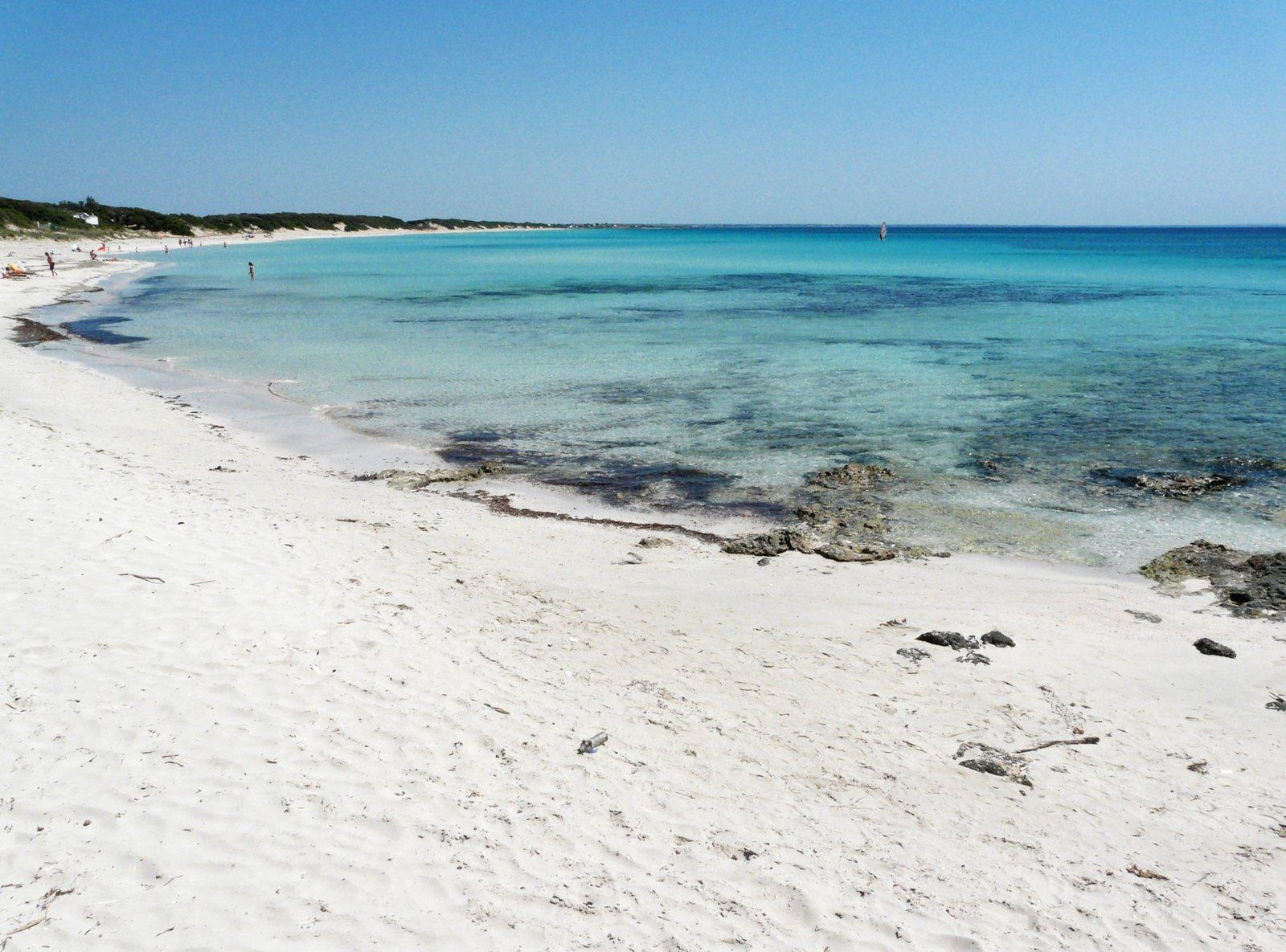
Photo: Hydruntum, CC BY-SA 3.0, via Wikimedia Commons (resized)
The Gargano: wild landscape, fewer places
The Gargano offers a different kind of coastal experience. The coast is higher, the coves harder to reach, the landscape more wooded. Glamping here is less developed than in the Salento, but the places that exist tend to have high-quality settings.
If you choose the Gargano, expect more complicated logistics: distances are greater and not every place is easy to reach without your own car.
The central Adriatic coast: less spectacular, more practical
The stretch of coast between Bari and Brindisi is less scenic than the Salento or the Gargano, but it has a few advantages: it is well connected, prices are more accessible, and some places just inland let you reach the sea in a few minutes while keeping a rural setting.
It is not seaside glamping in the strict sense, but for anyone who wants the sea without giving up a natural setting it can be a balanced solution. North of Bari, the olive groves around Trani and Bisceglie are a good example: stay among the trees at a place like Wishne, then head to the pebble coves and the old harbours a few minutes away.
What to check before you book
A few practical questions to check on a map before you confirm:
Is the distance to the sea measured as the crow flies or along the real route? Is there direct access to the beach, or do you need the car? Is the beach free or equipped (and paid)? In high season, how crowded is that beach?
It is best to ask the property before booking: on closeness to the sea, the gap between expectation and reality is the most common disappointment.
A closing thought
The best seaside glamping in Puglia is not always the one physically closest to the water. Sometimes it is the one that offers a privileged point of view — a terrace on a cliff, a path that drops to a private cove, a tent from which you watch the sun set over the Adriatic.
The quality of the experience depends on how the place has interpreted its relationship with the landscape, not only on the metres that separate it from the water.