Glamping reached Puglia (Apulia, in English) later than other Italian regions, but it has settled in convincingly. The credit goes to the landscape — which offers settings that are hard to find anywhere else — and to a rural tradition that fits naturally with the idea of hospitality spread across the countryside.
The trouble is that almost anything gets sold under the "glamping" label. Some places truly believe in it — well-dressed tents, thoughtful services, carefully chosen positions — and others are simply campsites with a few extra cushions. This guide tries to tell them apart.
What to look for (and what to avoid)
Before you book, it is worth asking a few questions. Is the bathroom private or shared? Does the place have a real natural setting, or is it a standard campsite with a "glamping" corner? Is there anything to do nearby, or will you be stranded without a car?
The best places of this kind in Puglia tend to share a few traits: they sit on farmland or in natural surroundings, they stay small (a handful of units, not dozens), and they pay attention to details that go well beyond a good mattress.
One name comes up again and again when we talk about this kind of stay: Wishne Agricamp, in an olive grove near Bisceglie, where the hosts eat with their guests and the tents are scattered far enough apart that nobody has a neighbour at their elbow. It is the clearest example we know of what Puglia glamping can be when it is done with heart. Read the full profile.
The inland: olive groves and silence
The most interesting inland areas for glamping in Puglia are the Valle d’Itria, the country around Fasano and Ostuni, and the northern Adriatic strip between Trani and Bisceglie. The last of these is less trodden by mass tourism, which shows in a more intimate atmosphere and fairer prices.
Glamping among olive trees is the most common formula, and for good reason: Puglia’s olive groves have a rare quality of light and sound. By day they filter a low, soft light; at night they are silent in a way cities never are.
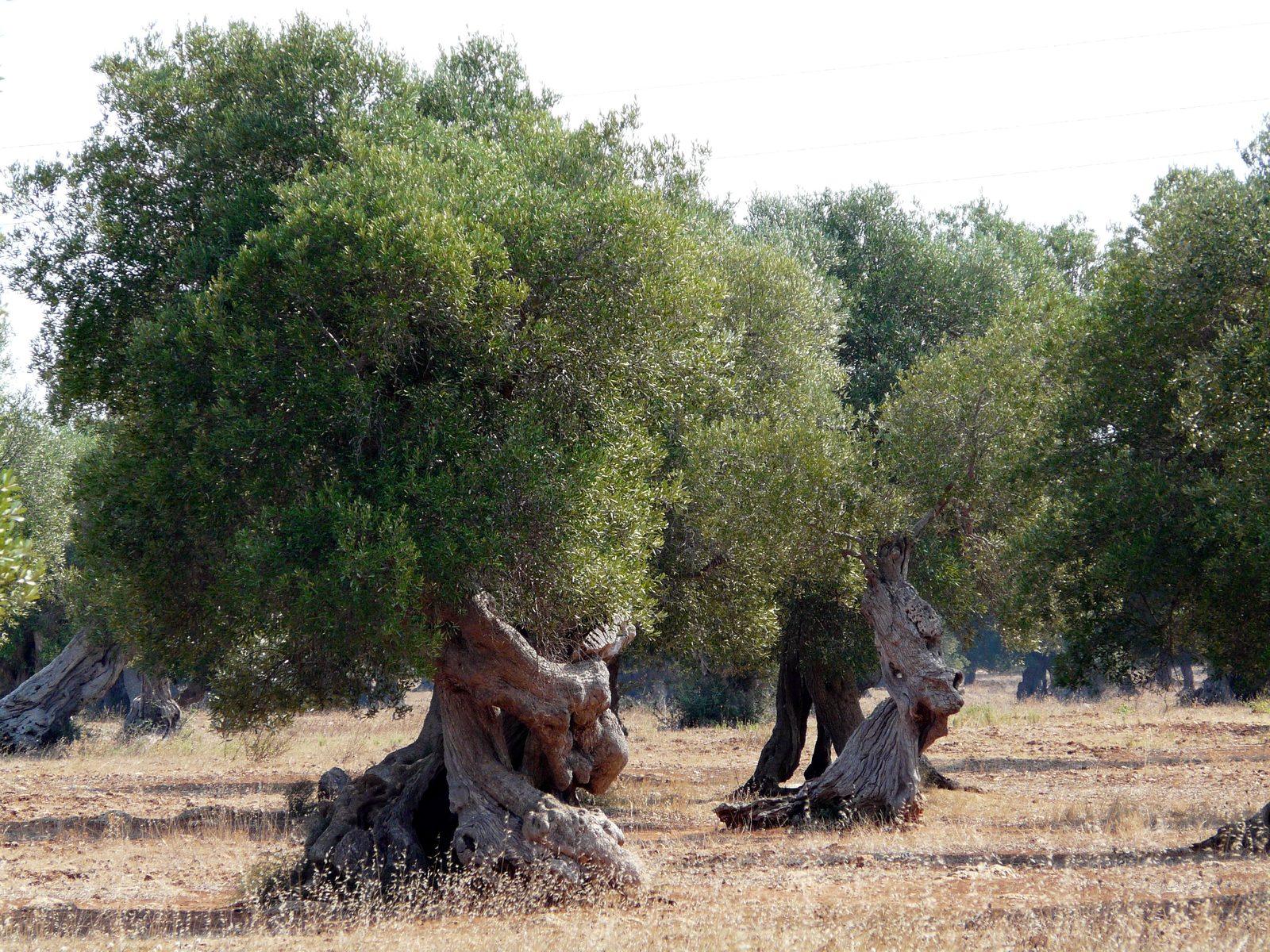
Photo: Wikimedia Commons
The coast: real access, or just a view?
Seaside glamping in Puglia deserves its own discussion, because what is offered often falls short of expectations. "Sea view" does not mean direct access; "close to the beach" can mean a quarter of an hour on foot along a provincial road.
The truly interesting coastal places are the ones with a physical relationship to the sea. Some are in the Salento, where low scrub opens onto wide views of the Adriatic or the Ionian; others are on the Gargano, in wilder surroundings.
Valle d’Itria and around: the most versatile choice
For anyone who wants to combine glamping, historic villages and good food, the Valle d’Itria remains the reference point. The area between Alberobello, Locorotondo and Cisternino has some of the best-kept places, often inside properties with trulli or masserie (fortified farmhouses). The landscape is photogenic and genuine, and the density of good restaurants nearby is a practical advantage.
The drawback is price: in high season this area has seen significant tourist inflation. Check carefully before you book.
How to book
Most Puglia glamping can be booked on Booking.com, Airbnb or directly with the property. Writing to the property directly lets you clear up the details that matter (distance from the sea, bathrooms, shade) and sometimes find better terms.
If a place is new or there is little information online, contact it directly for up-to-date details.
One last point
Glamping works best when you accept its hybrid nature. It is not a hotel, but it is not a festival tent either. It is a way of being in a place — slowly, paying attention to your surroundings. The best places know this and make it easy.